


Application of temperature-sensitive biomaterial "Smart Protective Adhesive" in the field of anorectal surgery
Time: 2026-03-19 20:18:12
Author: Horizon lnternational Medical Devices(Beijing)Co.L
Click:
Dr. Jing Tao, a professor in the Department of Anorectal Surgery at Dongzhimen Hospital of Beijing University of Chinese Medicine, shares a case study on the application of the thermosensitive biomaterial "Smart Protective Adhesive" in anorectal surgical wounds.
Dr. Jing Tao, a proctologist at Dongzhimen Hospital of Beijing University of Chinese Medicine, shares a case study on the application of the thermosensitive biomaterial 'Smart Protective Adhesive' in anorectal surgical wounds.
Due to the specific location, continuous movement, and open wounds after surgery, postoperative wound care in anorectal surgery has always been a key clinical focus. Clinically, there is a need for bio-dressings with good adhesion, complete coverage, hemostasis, anti-inflammatory and antibacterial properties, and analgesia to protect the wound.
Currently, liquid dressings, gel dressings, and ointments are commonly used in clinical practice to protect wounds. Liquids lose moisture quickly and cannot form a barrier, gels have poor diffusion and cannot completely cover the wound, and ointments are highly irritating and increase patient discomfort.
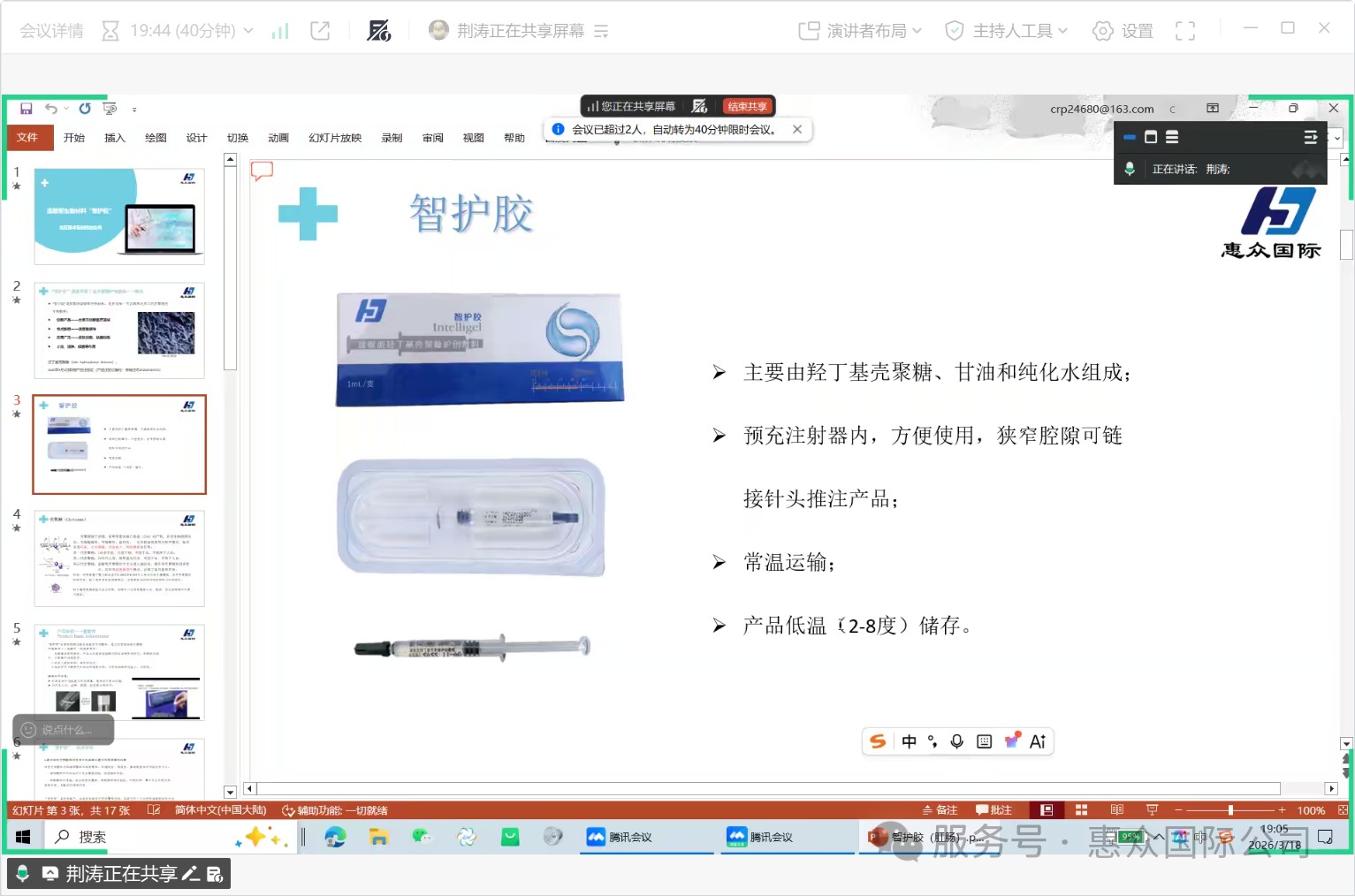
Thermosensitive biomaterials are characterized by their ability to transform from liquid to gel. In their liquid state, they diffuse well and completely cover the wound. Under body temperature, they rapidly transform into a gel, exhibiting strong adhesion and being unaffected by defecation. Once the gel forms a protective barrier around the wound, it prevents external irritants such as fecal residue, thus reducing pain. Its excellent permeability allows it to function as a sustained-release carrier; for example, when mixed with lidocaine, it prolongs analgesia time and helps patients tolerate pain. It also possesses good hemostatic, anti-inflammatory, and antibacterial effects. The product is naturally biodegradable and absorbable, non-irritating, and easy to use.




点击右上角
分享给朋友吧







 Long by picture save/share
0

Caring For Life And Benefiting The Public
点击右上角
分享给朋友吧
Products
——
About Us
——
Contact Us
——
Address: Room 1501, Building 6, Guotou Wealth Plaza, No. 9 Guang'an Road, Fengtai District, Beijing
Factory Address: Building 2, No. 22 Yanqi East 2nd Road, Yanqi Economic Development Zone, Huairou District, Beijing
Tel: +86 010-63386571
Email: 1004951924@qq.com
Copyright © Horizon lnternational Medical Devices(Beijing)Co.Ltd
 客服1
客服1 客服2
客服2
