





Temperature Sensitive Hydroxybutyl Chitosan Wound Dressing
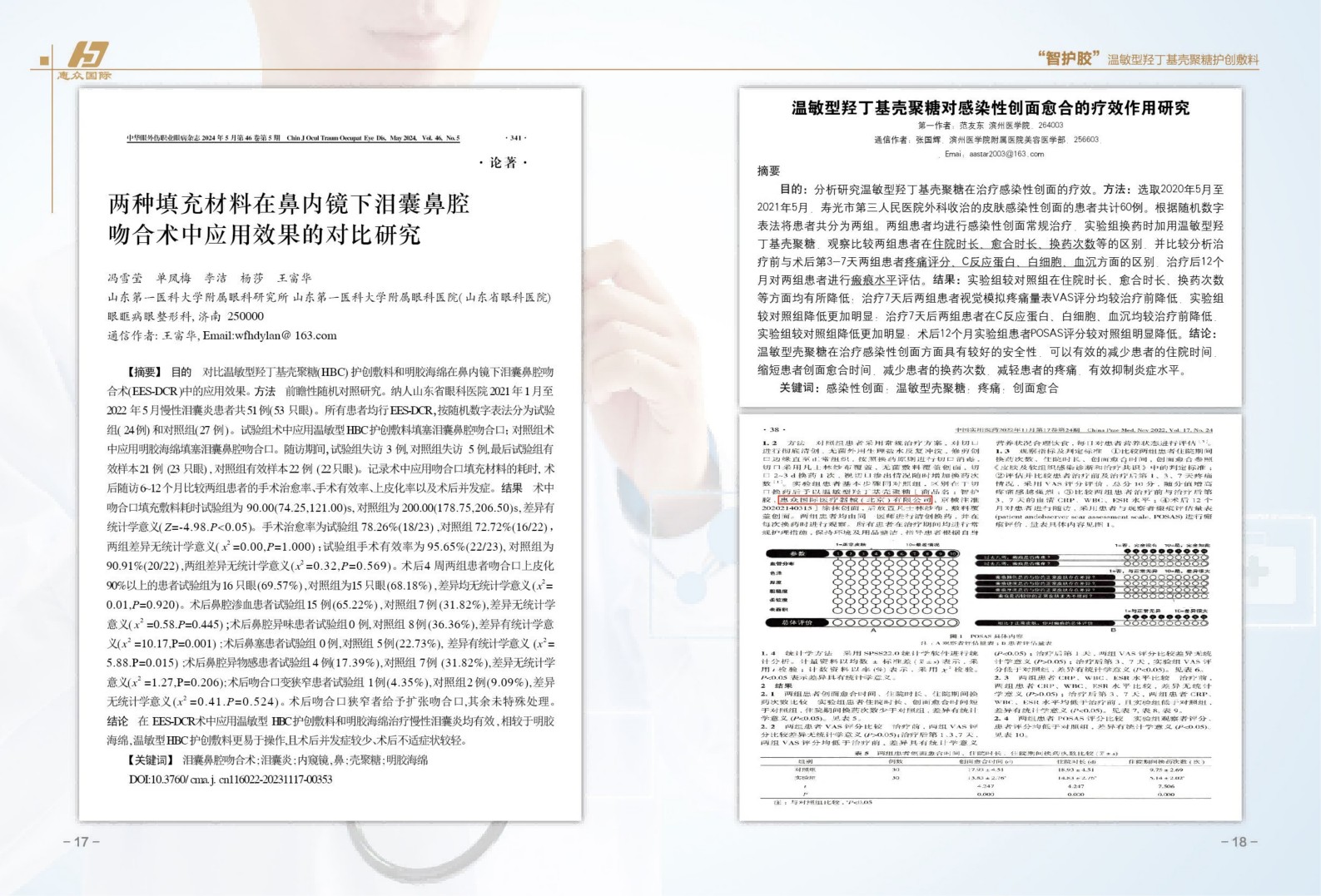
The thermosensitive hydroxybutyl chitosan wound dressing is an innovative medical device in Beijing, with completely independent intellectual property rights. It is the only commercially available third-generation chitosan biomaterial in the world.
After adding hydroxybutyl groups to the main chain of chitosan, it becomes temperature sensitive. That is, the product shape changes with temperature (2-8 ° is liquid, 20 ° is gel).
- Parameters
The thermosensitive hydroxybutyl chitosan wound dressing is an innovative medical device in Beijing, with completely independent intellectual property rights. It is the only commercially available third-generation chitosan biomaterial in the world.
After adding hydroxybutyl groups to the main chain of chitosan, it becomes temperature sensitive. That is, the product shape changes with temperature (2-8 ° is liquid, 20 ° is gel).
Based on temperature sensitivity characteristics, the following clinical problems can be solved:
1. To solve the problem of existing biological dressings being difficult to form a moist healing environment, utilize their morphology to change the moist healing environment that truly forms the wound. The liquid state disperses instantly, closely fits the wound surface, and gel can quickly form an effective barrier to the wound surface under the action of body temperature. Especially in chronic and difficult to heal wounds, the effect is better.
2. As a sustained-release carrier, synergistic drugs improve treatment efficiency. After mixing drugs, the sudden release state of the drug is changed to a sustained and stable release state, improving the timeliness of drug action. According to clinical application scenarios, any medication can be mixed, such as lidocaine alone with a duration of 15 minutes, or the combination of thermosensitive biomaterial 'smart protective gel', which can maintain the effect of lidocaine for 24 hours.
3. Mucosal adhesiveness is good. The existing gel products contain cross-linking agents, initiators and other substances that are not easy to degrade. These substances will liquefy when exposed to heat, and will quickly lose under the influence of mucosal secretion. This product does not contain crosslinking agents or other substances, and is not affected by secretion flushing. It can be attached to barrier mucosal wounds for 2-3 days. Widely used in dentistry, otolaryngology, gynecology, and proctology.
4. After adding hydroxybutyl groups to chitosan, the molecular surface exhibits a fully positive charge distribution, making its effects on hemostasis, antibacterial, anti-inflammatory, and other functions more prominent.
Thermosensitive biomaterials are mainly used for wounds, with a wide range of applications, to solve many clinical pain points and difficult problems. Especially with the function of sustained-release carriers, synergistic therapeutic drugs provide more comprehensive and targeted treatment plans for clinical practice.





 Copy product links
 Long by picture save/share
INQUIRY


Add Successfully
INQUIRY
Add Successfully

Caring For Life And Benefiting The Public

点击右上角
分享给朋友吧
Products
——
About Us
——
Contact Us
——
Address: Room 1501, Building 6, Guotou Wealth Plaza, No. 9 Guang'an Road, Fengtai District, Beijing
Factory Address: Building 2, No. 22 Yanqi East 2nd Road, Yanqi Economic Development Zone, Huairou District, Beijing
Tel: +86 010-63386571
Email: 1004951924@qq.com
Copyright © Horizon lnternational Medical Devices(Beijing)Co.Ltd
 客服1
客服1 客服2
客服2
